Bulbbul (dir. Anvita Dutt)
- la lune
- Jun 30, 2020
- 4 min read

It redefines supernatural horror from having a synthetic, artificial existence filled with blood-thirsty demon spirits and turns the focus towards the inhuman patriarchal sentiments which have haunted women since the dawn of ages.
Indian horror films, especially the ones in Hindi have a somewhat stained reputation which is why Bulbbul received bittersweet reviews upon its trailer release. However, after having seen the film, it is evident that the film loudly echoes with the ethos of a feminist revolution. It redefines supernatural horror from having a synthetic, artificial existence filled with blood-thirsty demon spirits and turns the focus towards the inhuman patriarchal sentiments which have haunted women since the dawn of ages.
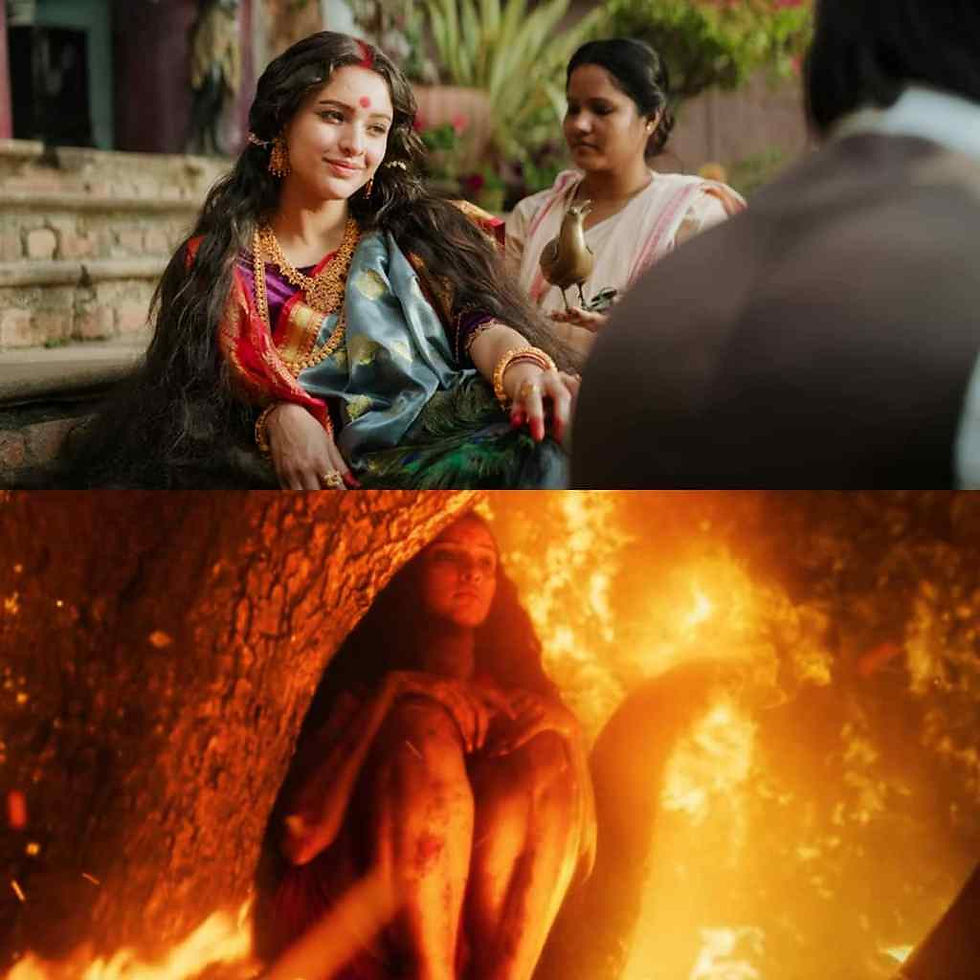
img courtesy: imdb
In the Bengal Presidency of 1881, as a young child, Bulbbul is married off to Indranil Thakur, a wealthy older landowner. During the ceremony, Bulbbul sees Indranil’s youngest brother Satyajit Thakur, a boy of her age and thinks that she is getting married to him; however, it isn’t so. Bulbbul and Satya develop a strong bond of friendship from the day they meet, a friendship based on fables and folklores of chudail (demon-woman). Mahendra, Indranil’s twin brother, is differently-abled and married to Binodini, the Chhoti Bahu (younger daughter-in-law) of the family. Twenty years later, after sensing the deepening of Satya and Bulbbul’s friendship as grown adults, Indranil sends him to London to study Law. Bulbbul is left heartbroken and alone, now overtly subject to the abuse of her family. When Satya returns after finishing his study, he is faced with a hard-setting realisation that over the years, everything in his home has changed. His giggling, starry-eyed friend has matured into the role of family’s matriarch, looking over everything with an aura of such deliberate unsettling calmness that it sends chills down the spine. After having left the town, Satya himself got replaced by the new town doctor Sudip, who adores Bulbbul a little too much for his liking. Rest of the story follows Satya’s inclination to solve the mystery of his town, which is haunted by the myth of a blood-thirsty chudail killing off the men of the village.

img courtesy: imdb
“…with graceful ease, she switches the same girl into a woman, always eloquently dressed and fanning her flames as she watches over the chores and the people around her with a disturbing and uncomfortable composure.”
Tripti Dimri as Bulbbul is a vision to behold, who takes on a dualistic role in the film. The first is her genuine portrayal of a young barefoot, naive girl, who is a friend, a writer but never the wife or the matriarch as the older daughter-in-law of the family. In the latter half, with graceful ease, she switches the same girl into a woman, always eloquently dressed and fanning her flames as she watches over the chores and the people around her with a disturbing and uncomfortable composure. Rahul Bose embodies the intensity and cruelty of a wealthy landowner and the troubling behaviour of his differently-abled twin brother in such a natural manner that effort is barely visible. Avinash Tiwari as Satya leaves behind the maddened mystical charm of his Majnu and instead becomes the educated and rational western man, who doubts and questions everything around him. Parambrata Chatterjee acts parallel to his character Sudip and appears benevolently on-screen, moving about the story as a behind-the-scenes man. Paoli Dam’s Binodini makes you feel hate, love and pity, as she appears as a woman who is just following the teaching of the herd as a means to survive and greedily wanting to thrive.

img courtesy: imdb
Siddharth Diwan’s cinematography comes out in bright pink and red-bathed shots which are breathtaking, to say the least, making us want the chaos to last longer to behold beauty.
The film by Anvita Dutt is extremely well written, beautifully shot and elegantly choreographed. The film enjoys and plays with every shade in the colour palette and turns the screen into a beautiful canvas, upon which the aesthetics of people and places paint themselves. Siddharth Diwan’s cinematography comes out in bright pink and red-bathed shots which are breathtaking, to say the least, making us want the chaos to last longer to behold beauty. The camerawork is exquisite and shows the internal and external spaces of the story world like a native who knows every nook and corner of the town. It is especially crucial in building the claimed ‘horror’ of the film which as an audience we realise is never Bulbbul but, someone else. It works to provide Bulbbul with an exalted, empowered and Goddess-like position as she stands firm and tall upon the atrocities and becomes all-powerful. The narrative and dialogue is well-written, layered with the patriarchal, socio-political ideology, reflecting multiple perspectives as we are put in the position of the highly functioning patriarchs, survival-minded women and innocents who fall as victims but rise as Gods. The haunting poetry and music by Amit Trivedi chime in, following in the footsteps of the narrative. The film resonates with empowered feminist sentiments, as the lion takes the pen from the hunter and turns the demonised fables into stories of exploitation.

img courtesy: imdb
Comments